
Where nature meets science.
Most hotels are built to remove friction. Climate control that never wavers. Lighting that never dims unevenly. Surfaces engineered so nothing ever feels rough, unpredictable, or alive. It is comfort by subtraction, a space with everything difficult designed out of it. It is also, increasingly, the wrong model for what people actually need.
The body was not built for sealed boxes. It was built for variation, for temperature that shifts through the day, for light that changes as the sun moves, for the low hum of a living environment rather than the flat silence of air conditioning. Somewhere in the pursuit of luxury, hospitality removed the very inputs the human body relies on to actually reset.
Concrete cannot do what nature does
A perfectly climate controlled room can make someone comfortable. It cannot make someone recover. Recovery is not the absence of discomfort. It is the presence of the right signals, natural light hitting the eyes at the right time to regulate circadian rhythm, humidity and air quality the lungs actually register as real, the ground underfoot instead of another artificial surface stacked on a concrete slab.
This is not a design preference. It is physiology. Cortisol regulation, sleep architecture, and nervous system tone all respond to environmental cues that sealed, synthetic spaces simply do not provide. A five star finish on a room does nothing for a body that has spent the week disconnected from anything real.
Comfort zones do not heal people
There is a second layer to this, beyond architecture. Most people arrive at any hotel still carrying the same environment they left, the same routines, the same digital noise, the same mental scripts running on autopilot. A beautiful room does not interrupt any of that. It just puts a nicer wall around the same unresolved state.
Real recovery asks for something less comfortable than that. It asks someone to step outside the environment that has been quietly keeping them stuck. Away from the desk that trained the shoulders to hunch. Away from the kitchen that trained the hand to reach for the same food without thinking. Away from the four walls that have absorbed every stressful call of the past year. None of that resets by staying inside a nicer version of it.
What the jungle actually offers
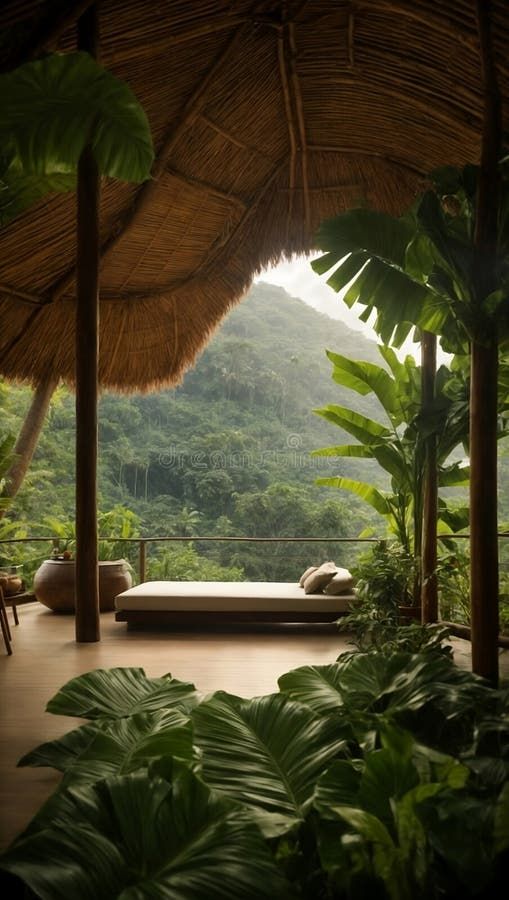
Stepping into a genuinely natural environment, heat that is felt rather than filtered, ground that shifts underfoot, air that carries the actual smell of the world instead of nothing at all, does something a controlled interior cannot. It pulls someone fully out of the identity and habits attached to their usual environment. There is no autopilot to fall back on. The body has to actually be present, and presence is where change starts.
This is not about rejecting comfort altogether. It is about recognising that the deepest form of comfort, the kind that produces actual physiological change, does not come from removing every variable. It comes from placing someone somewhere real enough that their system finally has permission to respond the way it was built to.
Building with this in mind
This is the thinking behind how a wellness property should be built. Not as another sealed structure competing on thread count and temperature precision, but as something that works with the surrounding environment rather than against it. Natural light instead of engineered lighting wherever possible. Materials and airflow that keep people connected to where they actually are. Programming that gets people out into the environment rather than kept comfortable inside a room that could be anywhere in the world.
The goal was never to build the most comfortable hotel. It was to build the one that finally lets people out of the comfort they have been hiding inside.